Most people spend 10 to 15 minutes each morning deciding what to wear, which adds up to over an hour per week. Weekly planning takes about 20 to 30 minutes once and reduces daily dressing time to under two minutes. That is a net savings of roughly 40 to 60 minutes each week.
Style Guide
How to Plan Weekly Outfits and Save Time Every Morning
End the daily struggle of choosing what to wear. Learn a simple weekly outfit planning system that saves time, reduces stress, and keeps you looking great.
Reading time: 6 min read Difficulty: beginner
1
Check your weekly schedule and weather forecast
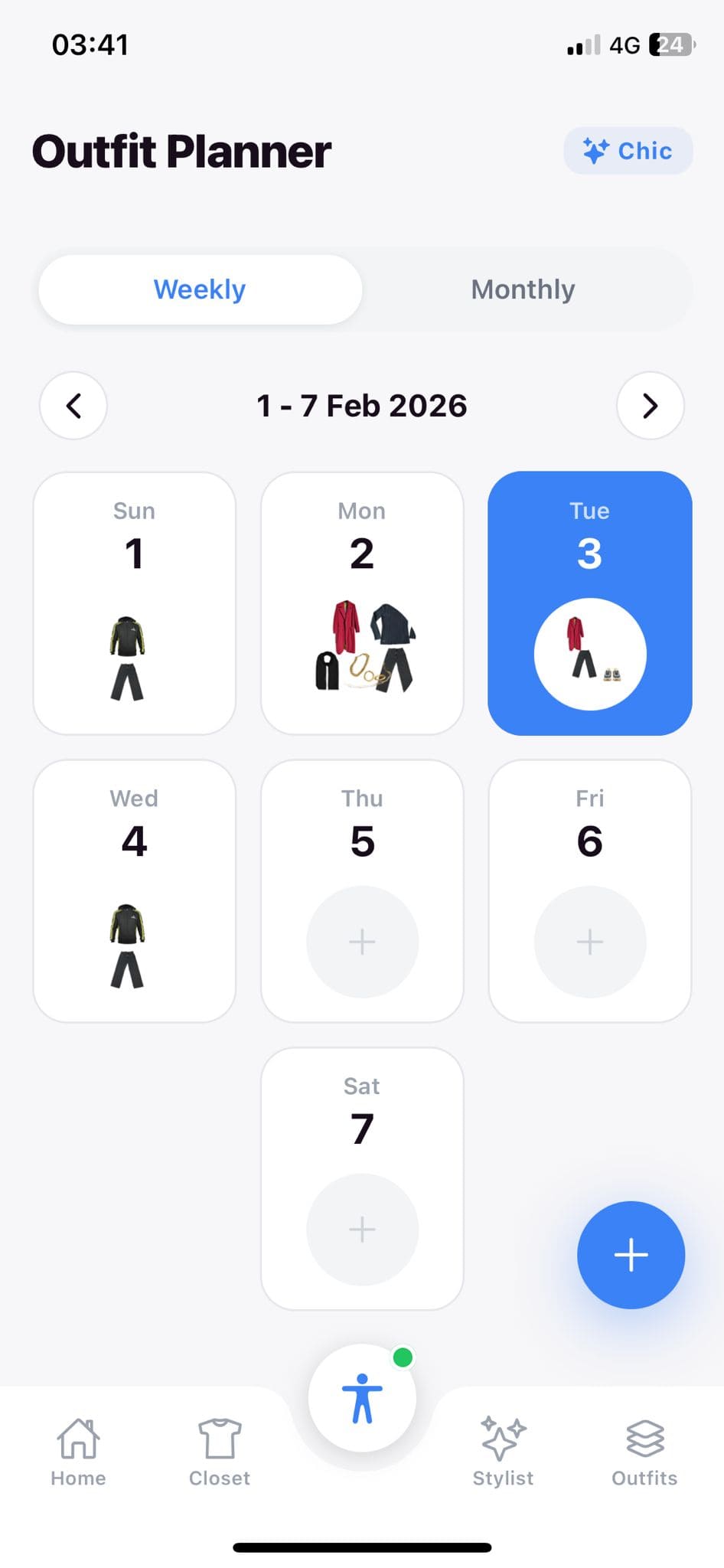
Every Sunday evening, review your calendar for the week ahead and note any meetings, events, or activities that require specific dress codes. Then check the seven-day weather forecast for your area. MyWear's weather-styling feature can automatically factor local conditions into your outfit suggestions.
2
Assign outfit categories to each day
Label each day by what it demands: work, casual, date night, workout, or event. This prevents over-thinking and narrows your choices immediately. Most weeks follow a predictable pattern, so once you establish your day-type rotation, planning becomes faster with each passing week.
3
Select outfits using your saved combinations
Pull from your library of proven outfit combinations rather than building from scratch each day. If you have documented your best looks in MyWear's outfit planner, this step takes just a few minutes. Choose outfits that match both the day's activity and the weather forecast.
4
Lay out or hang outfits in order
Physically prepare each outfit by hanging complete looks together or laying them out in a designated spot. Include accessories, shoes, and any layers you might need. This eliminates the risk of discovering a missing piece or a wrinkled shirt on a rushed morning.
5
Build in one flexible day
Leave one day unplanned for spontaneity or unexpected schedule changes. Having four to five planned outfits and one or two flex days strikes the right balance between structure and freedom. Use the flex day to try a new combination or wear something based on your mood.
Pro Tips
Batch your laundry on the same day you plan outfits so you know exactly what is clean and available for the week.
Keep a small capsule of fail-safe outfits for emergency mornings when plans change and you need to get dressed in two minutes.
Plan outfits in order of most demanding first: schedule your best looks for important meetings and events, then fill in casual days.
Use MyWear's style calendar to avoid repeating the same outfit within a two-week window, keeping your rotation fresh.
Common Mistakes to Avoid
✕ Planning seven outfits and feeling locked in with no flexibility
✓ Plan five outfits and leave two days open. Life is unpredictable, and having built-in flexibility prevents the planning system from becoming another source of stress.
✕ Not checking the weather and ending up overdressed or underdressed
✓ Always cross-reference your outfit plan with the weather forecast. MyWear's weather-styling feature does this automatically, flagging outfits that may not suit the day's conditions.
✕ Planning outfits that require items currently in the laundry
✓ Check your laundry situation before planning and sync your laundry schedule with your outfit planning day. Having a consistent laundry routine makes weekly outfit planning much smoother.

Put This Guide into Practice
Download MyWear and start applying these tips to your wardrobe today.
Free to download 4.8 App Store rating 50K+ downloads
FAQ
That is perfectly fine. The plan is a guide, not a contract. Having a plan means you always have a ready option, but you are free to swap if your mood or circumstances change. Keep your backup options accessible for easy switching.
Planning workout clothes is helpful if you exercise regularly, since it removes one more decision from busy mornings. Loungewear is usually less critical to plan but having a dedicated set of comfortable at-home clothes keeps you from reaching for items meant for other outfits.
Related Guides
How to Create Outfit Combinations That Always Work
Master the formulas behind great outfit combinations. Learn reliable pairing strategies that ensure you look put-together every single day.
How to Organize Your Closet for Maximum Efficiency
Transform your cluttered closet into a streamlined system that makes getting dressed easy. Learn proven organization methods that save time every morning.